One buying answer, backed by a record.
The locator helps shoppers choose a retailer. Retailers maintain their listings. Directions, calls and website clicks are recorded.
Available: retailer discovery and action records
The locator presents physical retailers using the facts held for the product. It distinguishes dated stock confirmations from unknown or old information. Review recorded directions, calls and website clicks to understand shoppers' next steps.
Assisted: setup needs an agreed scope
Review your imported list and widget configuration before publication. Agree any assisted import or integration work separately, including checks of the connection and its data feed.
Retailer website links take shoppers to the retailer's own site. Online buying options remain unverified: those links confirm neither the exact product, online stock, checkout nor delivery. Recorded actions are not sales.
When the answer is missing
Wait for the retailer results to finish loading. If loading fails, retry or contact the retailer directly. No results or missing stock information do not mean the product is sold out.
The moment is one shopper's choice: which store, which product, and when.
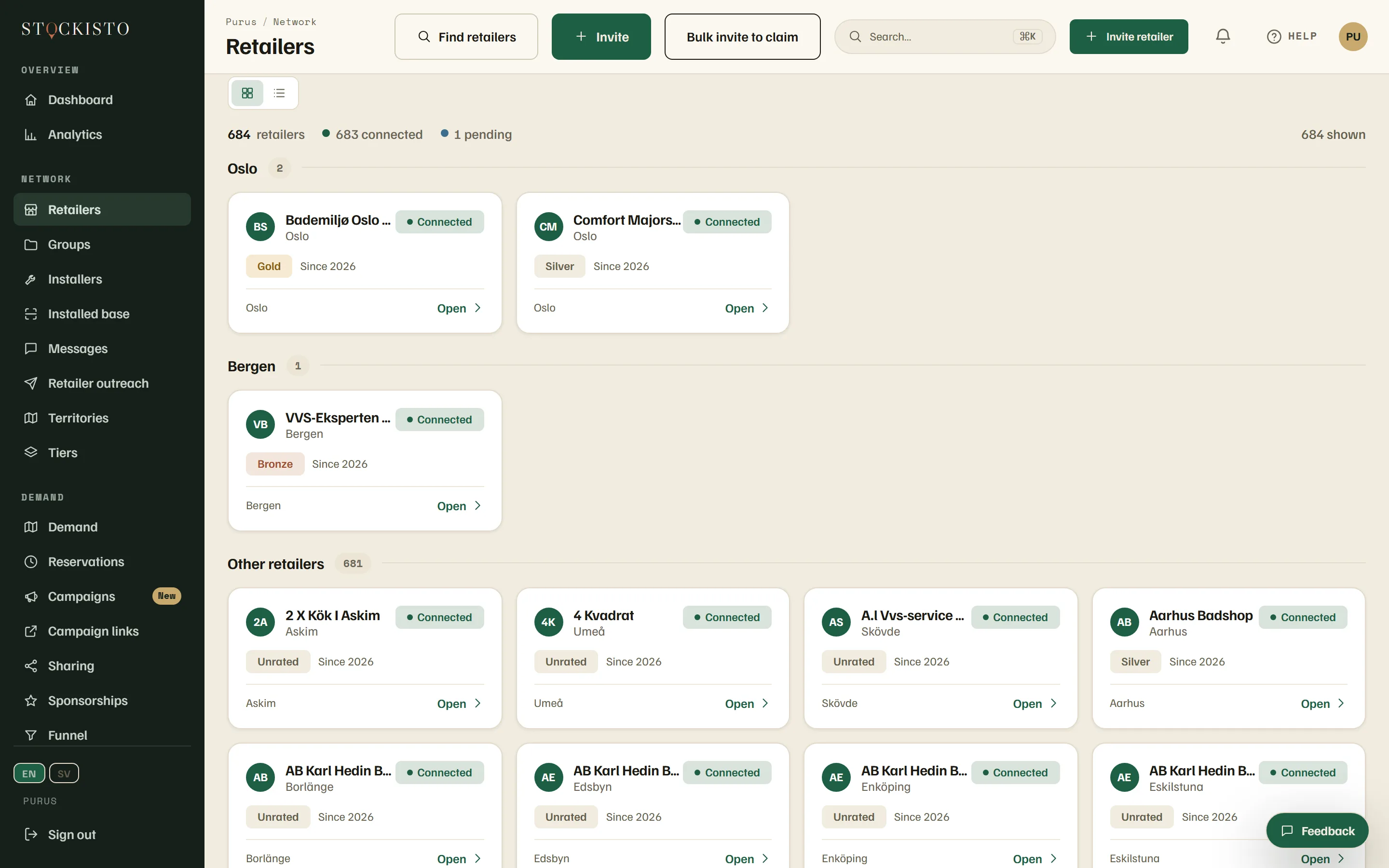
The map is which wholesalers feed which retailers, and where your shelf gaps are. A shelf gap is a retailer that carries your category but none of your range, in the imported retailer list you gave us.
Real screens from the running product. The rows carry demo data.
The moment someone picks a store.
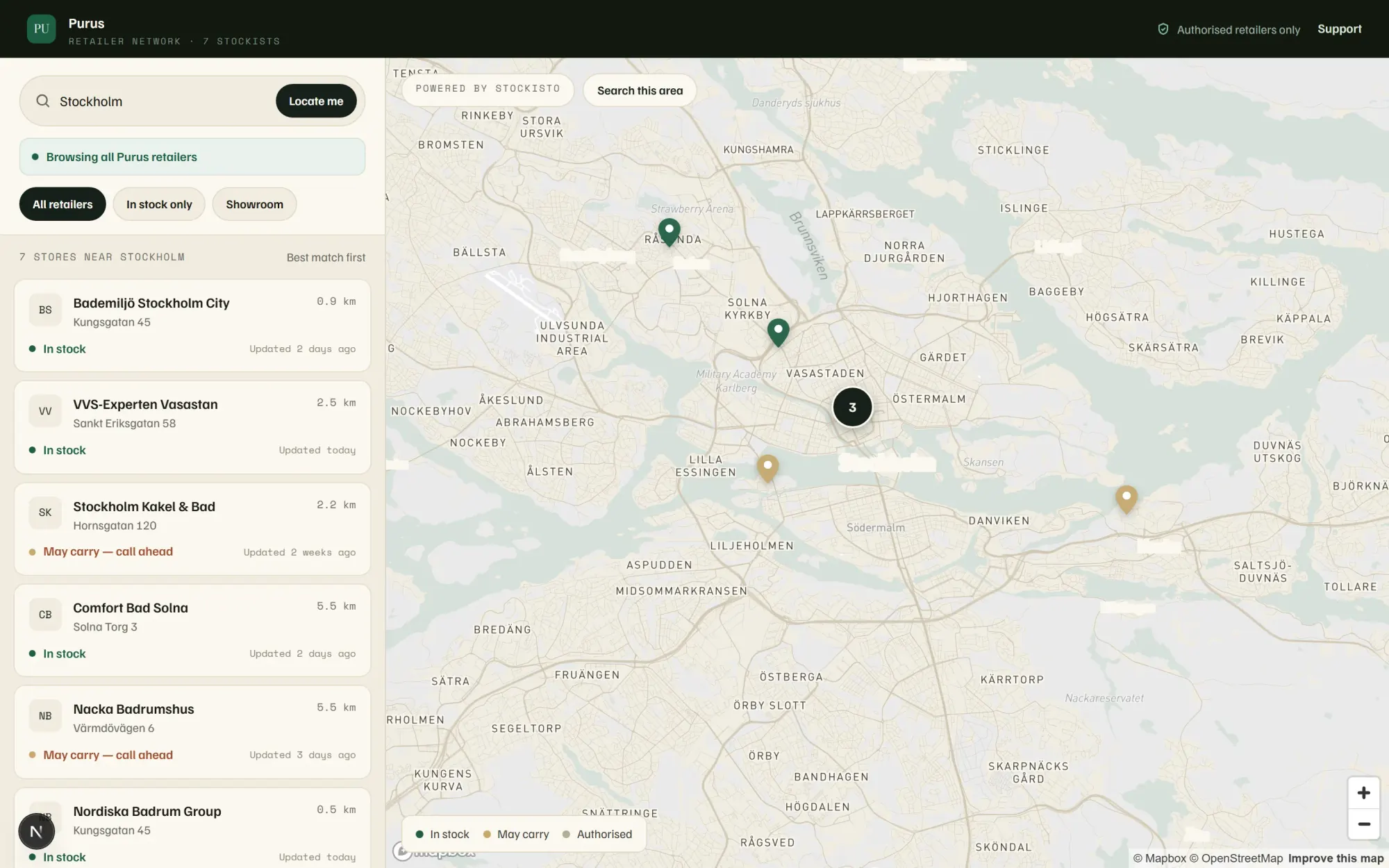
A shopper on your product page, or on the where-to-buy page, shares their location. They see which stores nearby confirmed the stock. Which store they chose, for which product, and when: that is the record.
It runs in your name
Your logo, colors and hero image, on your own domain. Each brand gets its own independent locator. A small Powered by Stockisto credit sits in the footer. On Growth and above, ask us and we remove it from the hosted locator.
Map and list, side by side
An interactive map with clustered pins next to a sortable, filterable retailer list. Shoppers browse whichever way suits them.
Filter down to the store that has it
Filter by stock status, showroom, service tags or product. Read the stock confirmation date; unknown or old information does not establish availability today.
One snippet, on your site
One snippet puts it on your pages, or share the hosted URL. There is no developer project here.
Fresh information needs an owner.
You review imported facts and correct the information you publish. Retailers can choose to maintain their own listings. An old stock confirmation stays old until someone updates it.
Import in hours, not weeks
Field mapping, automatic geocoding, staged review, bulk approve. You publish once the import is approved.
Every retailer gets a free portal
Stock status, showroom, services, photos and hours, maintained by the people standing next to the shelf. They are the only ones who actually know.
Stock is retailer-confirmed, and dated
The retailer said it was on the shelf, and when. Recently confirmed stores surface first and stale listings are flagged. This is not a till feed and we never call it one.
One store listing, every brand it carries
A retailer's listing names all the supplier brands on its shelf. That is what turns a retailer list into a map of the channel.
What the record is worth in the meeting.
A record only matters if it settles a decision. These are the decisions it is built to settle.
Where the demand went
Searches over time, directions, calls and website clicks, retailer rankings and a geo heatmap, filterable by brand, product, retailer and region.
Which retailers your demand reaches
Every shopper contact is logged against the store that received it. That is the number behind a partner tier, and behind the retailers you decide to back.
Every outbound click is attributed
Directions, phone and website clicks are recorded as events against the retailer who received them. They land in your own analytics too.
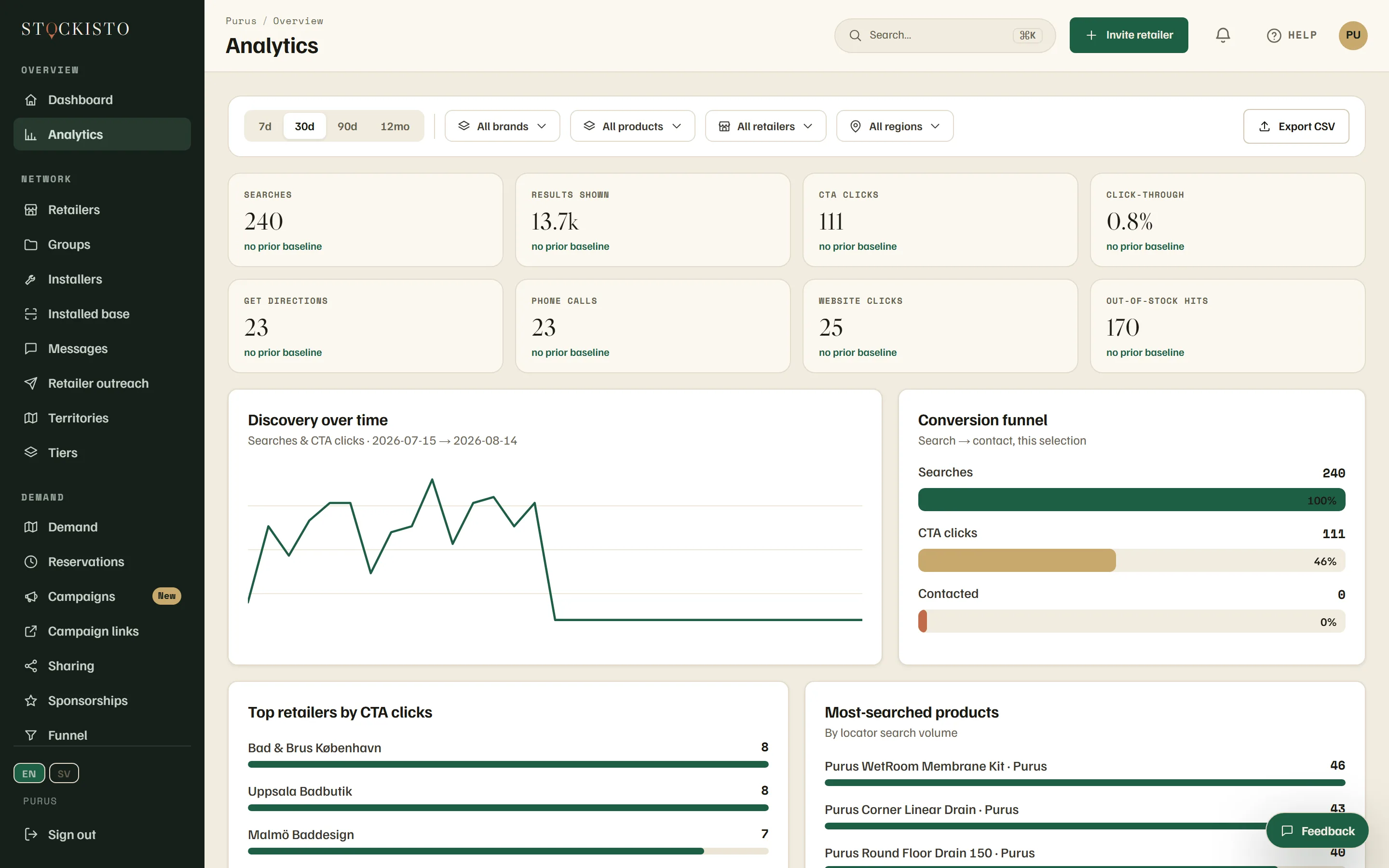
The locator and the widget are surfaces. The product is the record they produce: which store a shopper chose, for which product, and when. A map answers one question and forgets it. The record is what you still have at the next retailer meeting.
Try the available features.
Review the current plan limits and trial terms before starting. Assisted setup requires an agreed scope; unavailable capabilities are not part of the trial.
What an answer needs
Shopping surfaces and assistants increasingly ask where a product is in stock nearby. An answer carries more weight when it names the retailer that confirmed the stock, and the date.